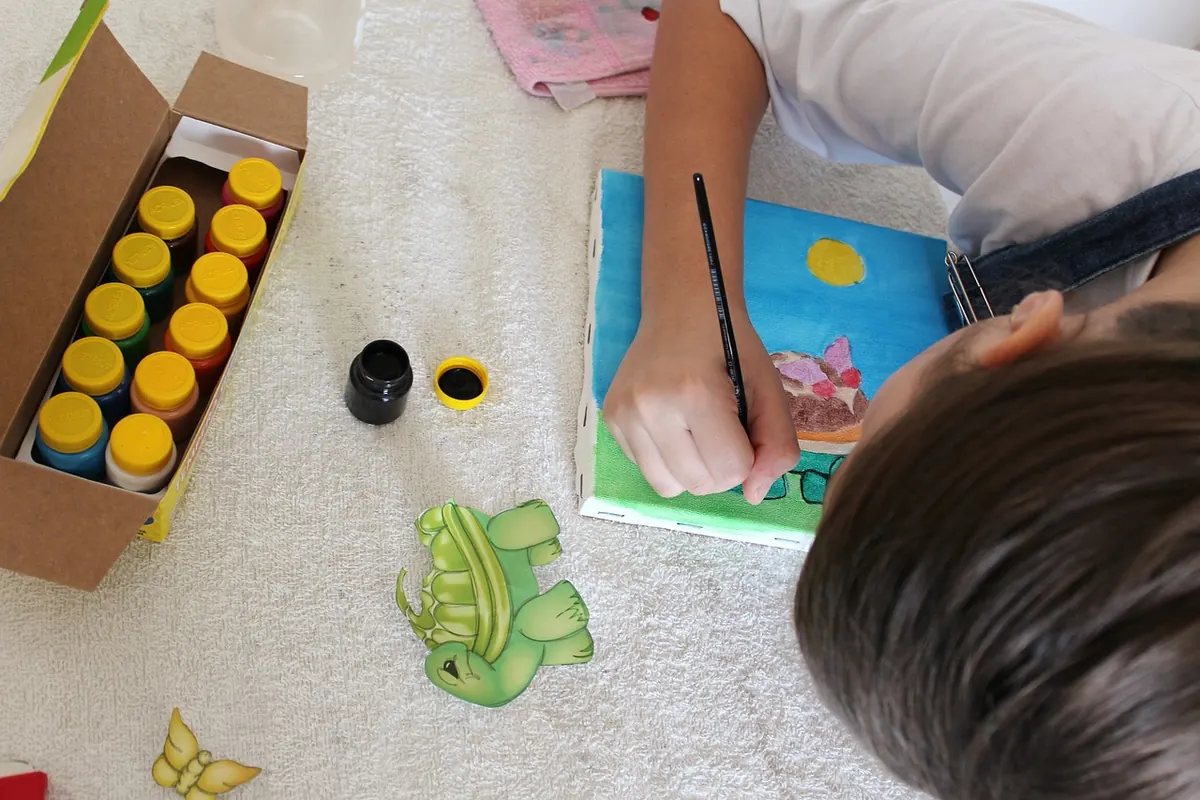
Gouache (usually said "gwash") is a water-based paint that behaves like nothing else on the shelf. It thins with water like watercolour, but it covers like acrylic, drying to a flat matte finish that hides every brushstroke beneath the next one. It is forgiving enough for a beginner's sketchbook and precise enough for finished illustration work. If you have been painting in watercolour and wishing you could simply paint over a mistake, gouache is the answer.
What Gouache Is Actually Made Of
Like watercolour, gouache is pigment held in gum arabic, a binder that stays water-soluble. The difference is the filler: an opaque white pigment or similar agent is added to give the paint body, so a stroke of gouache sits on top of the paper rather than soaking into it. That opacity is what lets you paint light over dark — a pale highlight across a deep shadow, or a crisp shape over an existing layer.
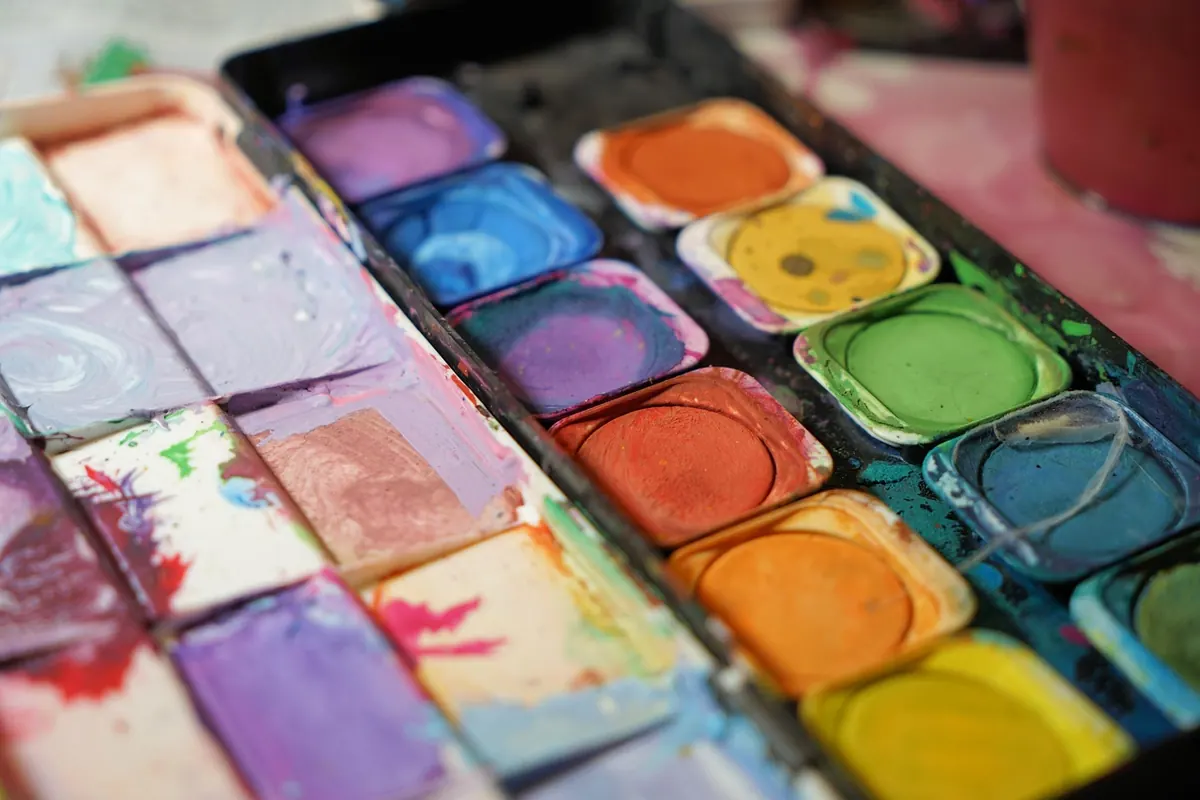
It comes in tubes and small pans. Tubes are the practical choice for anything bigger than a sketch, because you can squeeze out a decent puddle and keep it workable. Straight from the tube the consistency is like thick double cream; a drop or two of water brings it closer to single cream.
One quality catches nearly everyone out at first: gouache stays rewettable. Mist it tomorrow, or drop a wet brush on a dry passage, and the paint will lift. That is a gift for corrections and a hazard for finished work.
Gouache vs Watercolour vs Acrylic
All three paints are thinned with water, and then they go their separate ways.
- Opacity. Watercolour is transparent: the white paper does the work of light and layers multiply. Gouache is opaque and can cover. Acrylic is opaque too, but it forms a plastic film.
- Reactivation. Watercolour and gouache can both be rewetted and reworked on the page. Acrylic cannot — once it is dry, it stays dry unless you paint over it.
- Finish. Watercolour glows through the paper and looks translucent. Gouache dries matte and slightly chalky, with rich flat areas of colour. Acrylic usually dries with a slight sheen unless you use a matte medium.
- Colour shift. Every paint shifts a little as it dries. The matte surface of gouache makes darks read deeper and lights flatter than they did when wet, so test a mix on scrap paper.
- Layering. With acrylic you build up indefinitely. With gouache, each new layer is a negotiation with the one underneath, and too much brushing will lift it.
In practice, watercolour rewards patience and planning, acrylic rewards speed and boldness, and gouache sits usefully between them: quicker to correct than watercolour, softer and more controllable than acrylic on paper.
What Gouache Does Well, and Where It Fights Back
Gouache suits anyone who wants flat, deliberate colour: illustration, botanical studies, architectural sketching, poster-style design work and quick studies outdoors. It is also a fine rehearsal medium — many painters use it to work out a composition and colour plan before committing to a larger oil or acrylic canvas.
Two limitations are worth knowing before you spend money. Very thick, pasty layers can crack and flake as they dry, so keep the paint creamy rather than mountainous. And because it reactivates, a finished painting on paper is best framed under glass with a mount that keeps the glass away from the surface.
Where gouache feels awkward is in large, soft, atmospheric washes. Big blended skies and misty distance take practice, because opacity works against the glow you get from transparent watercolour.
A Starter Kit That Will Not Waste Money
Buy less than you think you need. Six colours will take you further than a box of twenty.
- Titanium white — buy the largest tube you can. You will mix it into almost everything.
- Ultramarine blue — a cool, versatile blue that mixes clean greens and greys.
- A warm red — cadmium red or pyrrole red.
- A yellow — primary yellow or lemon yellow; lemon keeps greens fresh.
- Burnt sienna — invaluable for mixing skin tones and knocking back blues.
- Optional: a black or Payne's grey, used sparingly as a mixer rather than as a shortcut for shadows.
For brushes, a few synthetic rounds (roughly sizes 2, 6 and 10) plus one flat about a centimetre wide will cover most work; synthetics keep their spring and cost far less than sable. Paint on watercolour paper of around 300gsm — hot-pressed for smooth detail, cold-pressed if you like texture — or use a decent mixed-media sketchbook for studies. Add two water pots (one for mixing, one for rinsing), a rag, and a white palette or plate so you can judge colour accurately.
Your First Painting, Step by Step
- Tape a sheet of paper to a board, or open a sketchbook flat.
- Draw the shapes lightly in pencil. Keep the subject simple: a mug, a piece of fruit, a folded cloth.
- Squeeze out pea-sized blobs of each colour. Do not flood the palette.
- Mix your mid-tones first and block in the big shapes. The mix should look like melted ice cream, not coloured water.
- Paint light over dark where you need to. That is the move watercolour cannot make.
- Let a passage dry before layering over it. Work into damp gouache and it blends; work onto dry and it covers.
- Save the brightest highlights for last, applied with thick white and a clean brush.
- Step back and judge the values before you fuss with details.
If a colour goes wrong, let it dry and paint over it — gently. Scrubbing at the surface with a wet brush lifts the layer beneath and leaves a muddy patch.
Two Mixing Habits Worth Building
Mix more paint than you need. Matching a colour a second time is far harder than it looks, and running out halfway through a large shape shows. And keep your white clean: mix tints on an untouched part of the palette, because a dirty white turns every light grey.
A Short Exercise to Try This Week
Set aside forty minutes and paint a white mug or an egg using only white, ultramarine and burnt sienna. Sketch the shape, block in the mid-tone, then build the shadow with a cool blue-grey mix. Work the reflected light along the edge, and finish with thick white where the light hits hardest. The exercise teaches you how much white is really in a "white" object, and how little black you need for a convincing shadow.
When you have finished, keep the palette going: mist it, cover it, and the paint will stay usable for days. Brushes clean up with warm water and a little soap, but rinse them properly at the ferrule, because dried gouache there will splay the bristles for good. Leave the painting flat to dry, then start the next one.
Photo: anarosadebastiani / Pixabay